
Light Flare Flirt: How Haze and Sunspots Make Great Photos
Light flare above the spectacular Milford Sound in Fiordland, New Zealand.
Light flare, when controlled and deliberate, can lift even the most ordinary photos to a whole new level of creativity. Here’s how I go about adding light flare to create great photos.
Adding light flare, also called lens flare, is a fantastic way to produce creative, life-affirming and visually compelling photos that celebrate the beauty of nature and life on earth. To add light flare into your own photos simply photograph directly into a bright light source.
The visual effect that’s produced by light flare will vary from a build up of apparent haze, with a corresponding loss of sharpness and color saturation, to more pronounced and visually interesting effects like sunspots.
I made this photo on a cruise through the magnificent Milford Sound on the South Island of New Zealand. It was a beautiful day and the scenery was stunning.
But I’d wager that it’s the light flare, more than anything else, that elevates this image above that of a typical snapshot.
Those circular sunspots, evident in the top right corner of the photo, are clearly a result of the light haze that’s reached the sensor directly through my camera’s lens.
A lot of folks hate this type of pictorial effect, and it’s fair to say I’m rarely a fan of it myself.
But when it works, it works.
I was in a really beautiful place but, being on a boat, my movement was limited in my search to make great photos.
Experience tells me that, when photographing directly into the light, the resulting image will likely appear flat, hazy and low in color saturation.
If I’d turned around I would have ended up photographing with the light behind me.
That would have provided more even illumination across the scene and eliminated any of the adverse affects associated with photographing into the light.
However, turning around and photographing with the light behind me would have excluded the mountains from the composition, resulting in a far less interesting background.
It seemed like the best thing I could do was to break the rules and begin to flirt with the light flare caused by photographing directly into the light.
In this case I’m glad I did.
The light flare provides an interesting visual element to the image, without impeding upon the illuminated and textured areas of trees and water throughout the rest of the composition.
To aid my cause, I opted for a relatively wide-angle focal length lens to incorporate the side-lit trees on the left of the composition, as well as the blue water in the near foreground.
Without those illuminated areas the resulting photo would have been very bland and almost without color.
I also like how the eye travels from the larger trees, on the left side of the frame, and continues along the line of backlit trees in the distant centre of the composition towards the mountain and the god rays above it.
Two candelabra, St. Peter's Eastern Hill Anglican Church in East Melbourne, Australia.
When to Embrace Light Flare In Your Photos
The trick about photographing directly into the light is to know when to embrace haze, sunspots and light flare.
The simple answer is when doing so leads you to a more visually interesting and emotionally compelling result.
A lot of folks say you should never photograph into the sun or other bright light sources, unless you’re wanting to create a silhouette.
Haze, apparently, is to be avoided at all costs.
That’s because haze can adversely affect an image, resulting in a loss of sharpness, contrast and saturation. The result of which is a flat, lifeless image.
And no one wants that, now do they?
I should know, as I used to work at Kodak.
Fine grain, sharpness, contrast and color saturation (low, medium or high) were the primary characteristics of film and paper that Kodak, and other film manufacturing companies, used to describe their products.
However, while sharpness, contrast and saturation are key criteria in critiquing the success of a color photo, it’s the emotional impact of a photo that, ultimately, determines it’s success.
Forensic photography, passport photos and certain types of commercial and industrial photography rely heavily on technical perfection.
However, most landscape, wildlife, people and architectural photos will be more successful when imbued with atmosphere or mood.
And that’s particularly the case when atmosphere and mood are balanced with great composition, narrative and symbolism.
I hope you can tell just how important the atmospheric effect of light flair was in my mind when I made the above photo of two candelabra, in St. Peter’s Eastern Hill Anglican Church, in East Melbourne, Australia.
By embracing the haze, resulting from photographing directly into the light, and employing selective focus I was able to ensure the candelabra recorded nice and sharp, while allowing background haze to add a slight sense of mystery into the photo.
As you can see, the sharpness and highly textured nature of the candelabra are largely unchanged by the effects of the background haze.
That’s because they’re illuminated by a less intense light source coming from above and behind the camera.
Ultimately, it’s the relationship between sharpness and haze, together with the exaggerated scale between the candelabra and visual elements, such as the out-of-focus parishioners and organ pipes, that makes for a successful photo.
Atmospheric light flare, from street lights, in Christchurch, New Zealand.
How to Create Starburst Light Flare in Your Photos
This photo of light flare came about when I choose to incorporate bright, street lights into a photo of street art on a cold evening in Christchurch, New Zealand.
The kind of light flare evident in this photo is referred to as the starburst effect.
Starbursts, a result of light diffraction, are created when the progress of bright light waves is disrupted by the edges of aperture blades as the light passes through the camera’s lens.
This contact causes portions of the light to be bent and spread into a geometric pattern resembling rays that radiate outward from concentrated, bright light sources in the photo.
It’s interesting to note that it’s the number of blades within the lens that determines the actual number of spikes in the starburst created by a particular lens.
A lens with an even number of blades will produce a starburst containing and equal number of spikes.
So a lens that controls the size of an aperture, via 6 independent blades, will produce a 6-spiked starburst.
However, lenses that contain an uneven number of blades to form aperture openings within the lens actually produce a starburst with double the amount of spikes.
That means that a lens that uses (say) 9 blades, to create the range of apertures available within that particular lens, will create a starburst effect consisting of 18 separate spikes.
Here’s how to create a starburst effect in your own photos:
Set your lens to a very narrow aperture, like f/16 or f/22, or whatever the physically smallest aperture your lens offers
Photograph into one or more bright light sources
Light sources that are circular (or thereabouts) in shape will produce the best starburst effects
You might also be interested to know that a filter, particularly one that’s partly covered in dust or fingerprints, is likely to enhance or extend the effects of light flare and, quite possibly, introduce the appearance of sunspots into your photos.
About to Travel?
Should You Fear Light Flare and Sunspots In Your Photos?
Some folks see light flare and sunspots as a kind of blight, a pox on their pictures.
But impactful images are about much more than the usual technical and compositional attributes we so often associate with great photos.
Haze has the advantage of creating very atmospheric and emotive results.
And I think you’ll agree that atmosphere has, most definitely, contributed to the success of the photos I’ve included in this post.
Indeed, it’s turned fairly pedestrian images into quite reasonable travel photos.
If you want to avoid light flare, simply photograph with the light behind you. It makes sense to do so when you’re looking to make colorful, information rich images.
For a little more drama, and to enhance texture and detail in your photos, reposition yourself so that the light illuminates the scene from the side.
But once you’ve made all the safe pictures you need to adequately cover an event, a location you’re visiting or when making portrait photos, why not try making a few photos directly into the light.
Great for people and nature based photos, this approach works really well when the sun is close to the horizon and unobscured by cloud cover.
You’ll lose nothing from the attempt, and you could so easily be rewarded with quirky, imaginative and memorable images.
What’s more, it’s a creative activity which means it’s fun to do so.
And what’s not to like about that.
Needless to say, they are days when we all struggle to make great photos.
It can be particularly disheartened when your luck seems to run out after traveling a long way to reach your destination.
Strangely, spending hours walking around once we arrive at our destination in search of fantastic light and great photos, doesn’t always help.
What’s the reason for your mileu?
Is it the weather?
Are you not in the right frame of mind to make great photos?
Have your own expectations for success brought on debilitating anxiety?
Of course it could be any of the above, or perhaps a combination of them all.
Sometimes the best thing we can do is to break our state and do something entirely different.
That might be putting our camera away and taking a break from photography for a while.
There’s no reason that wouldn’t involve a rest, some food or even a refreshing beverage.
Alternatively, if you’re in the city and you have time to spare, you could engage your senses and, perhaps, your imagination by watching a movie or by going to an art gallery or museum.
What I find to be particularly helpful, when I’m struggling for motivation or when my creativity falls, is to seek out beauty.
Doing so makes me happy, and being happy is also the emotional state I find myself in when I’m making great photos.
Of course, beauty can be found anywhere.
In the face of a young child
The withered hands of a grandparent
In nature, whether it be in vibrant spring flowers or the muted colors of fall leaves
Just remember that the effects of haze become evident when you photograph into very bright light. And that’s true whether it’s day or night.
With that fact in mind, be sure to situate yourself, in relation to the light, to enhance your chances of success.
“When the inspiration for great photos deserts you, turn around.”


This is the best photography course in Melbourne. Learn photography, master your camera and realize your creative potential by making beautiful, life affirming images.
I’m Glenn Guy, an experienced teacher and owner of the Travel Photography Guru website and blog.
Here’s the private photography course that’s specially designed around your needs, your camera and the photos you most want to create.
Conclusion: Is It Time to Add Light Flare into Your Own Photos?
Perhaps it’s time to consider trying to incorporate haze into your own photos, every now and again.
If you don’t like the color, size or amount of light flare created, try shading the front glass element of your lens to minimize the haze and reduce or even eliminate the appearance of sun spots.
Of course you should take care to avoid looking directly at the sun with you naked eye.
To do so through a DSLR camera is particularly problematic as the camera’s internal mirror can amplify the brightness of the sun and damage the eye.
Have fun flirting with light flare but, as always, do take care my friend.


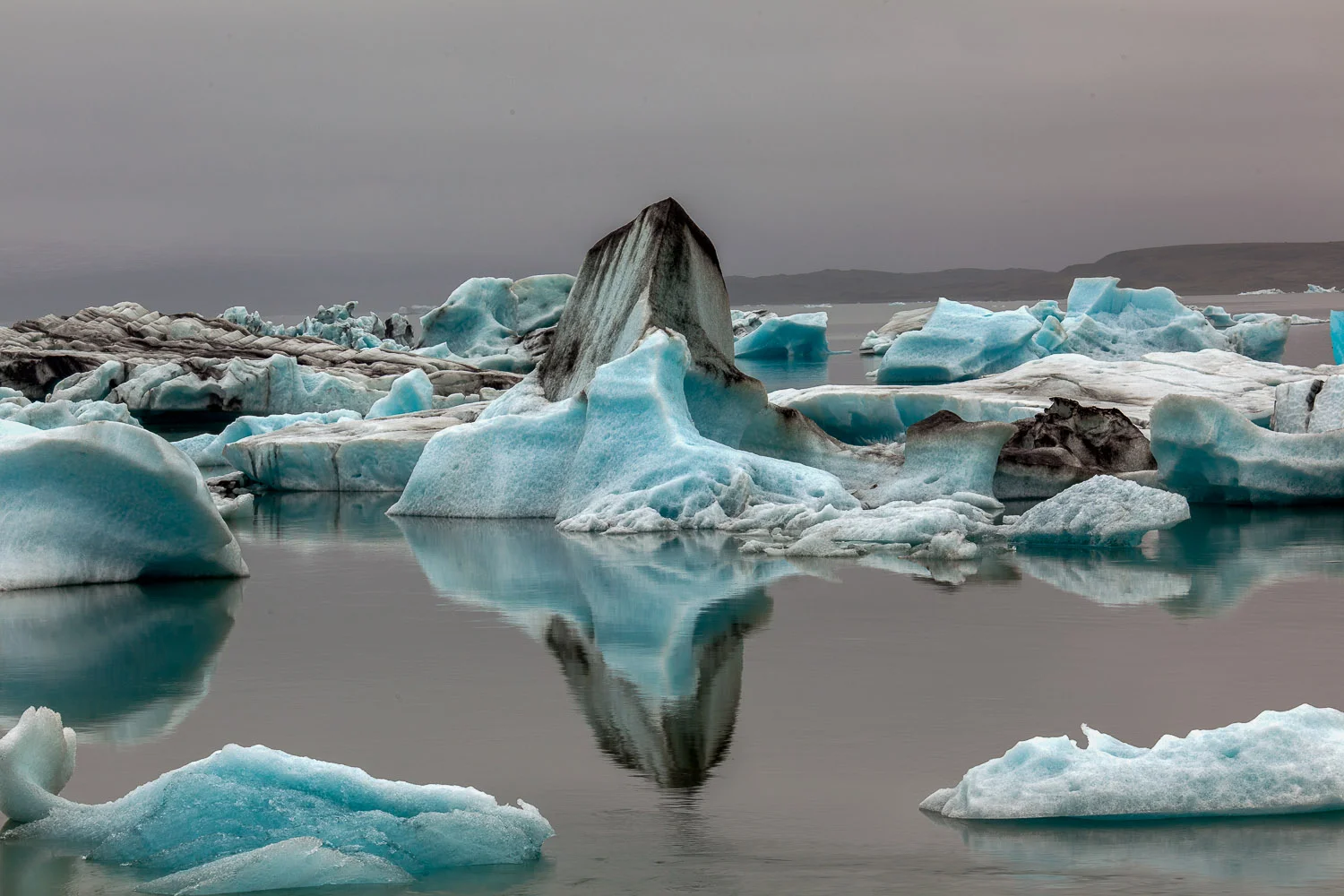
The Leirhnjúkur Lava Fields is a bizarre landscape comprising of ash and steam. Completing the hiking trail, during the middle of the night, was one of my most amazing Iceland travel photography experiences.