
Jökulsárlón Glacier Lagoon: Epic Iceland Travel Highlight
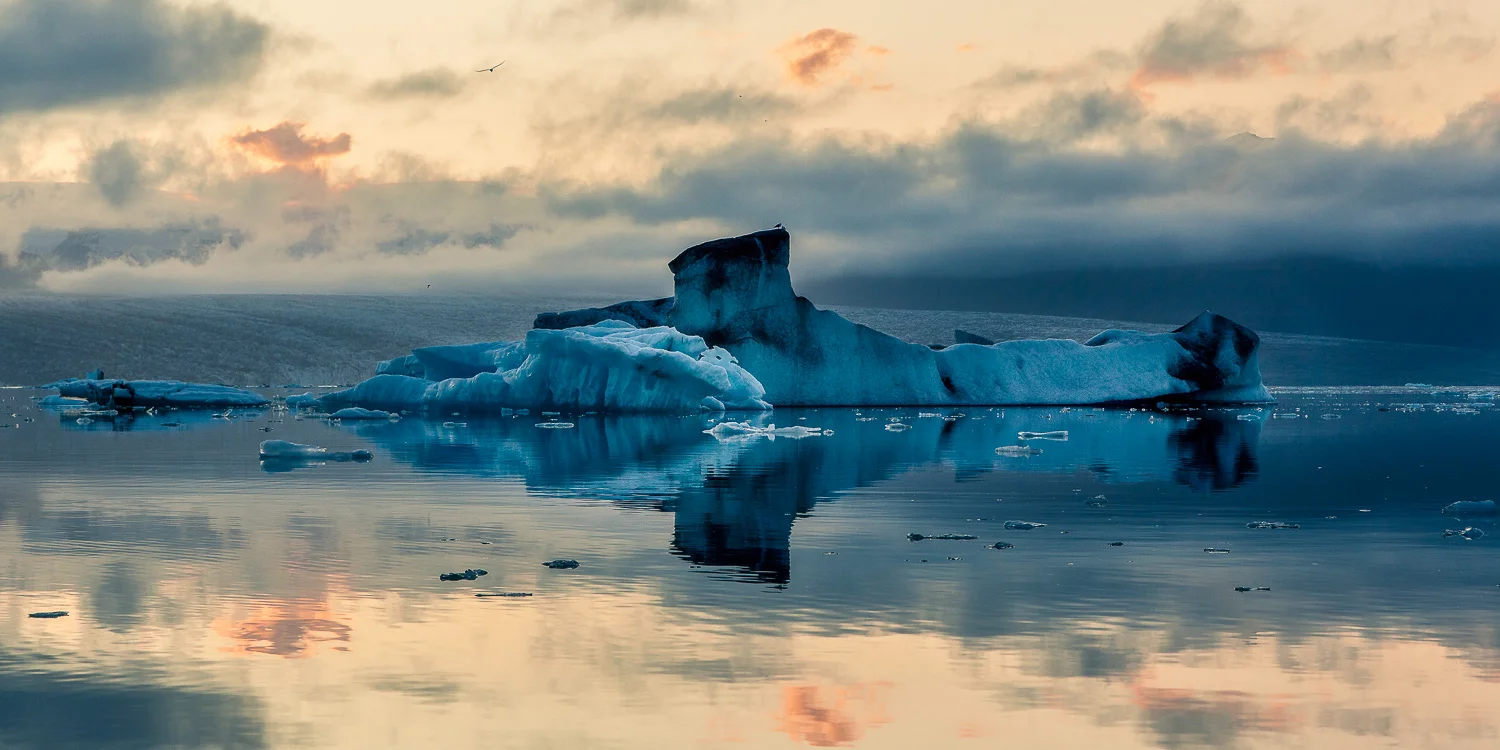
Beautiful iceberg reflection on Jökulsárlón Glacier Lagoon in Epic Iceland.
Jökulsárlón Glacier Lagoon is one of Iceland’s most popular tourist sites to visit and photograph. I’ve been to Iceland on two occasions and, of all those epic Iceland travel photography destinations, the glacier lagoon remains one of my favorites.
Jökulsárlón Glacier Lagoon is located in Southeast Iceland, 4-5 hours drive along Route 1 from Reykjavik. Icebergs, carved off the Breiðamerkurjökull Glacier, float across the water and visitors to Jökulsárlón Glacier Lagoon have access to stunning views, walks, wildlife, and amphibian boat tours.
Situated on the edge of Vatnajökull National Park, the lagoon is just a short walk away from the North Atlantic Ocean and the popular Fellsfjara, a black sand beach also referred to as Diamond Beach.
This photo was made around midnight from the shores of the amazing Jökulsárlón Glacier Lagoon.
It was a lovely mid summer's night and the photo was made while waiting to embark upon a specially arranged 1-hour zodiac cruise.
This was during my first Iceland travel adventure, way back in 2011.
Tourism has grown significantly since then, so please don’t expect to be able to organize an amphibian boat tour at that time of evening.
Nonetheless, whatever time of day you find yourself at the glacier lagoon, it’s amazing to photograph these wondrous icebergs floating, ever so slowly, on their way to the North Atlantic Ocean.
The popularity of Jökulsárlón Glacier Lagoon really started to boom after it began appearing in Hollywood films, including the following:
A View to a Kill
Die Another Day
Lara Croft: Tomb Raider
Batman Begins
Jökulsárlón was also featured in the critically acclaimed and hugely popular HBO series a Game Of Thrones.
Along with Deadwood and Downton Abbey, Game Of Thrones is my favorite show.
Jökulsárlón Glacier Lagoon Visitor Facts
Jökulsárlón Glacier Lagoon is big, measuring 1.5 km in length and covering an area of 25 square kilometers. It’s also very, very deep with a recorded maximum depth of around 250 meters.
Expanding significantly, due to global warming, the lagoon is now considered to be the deepest lake in Iceland.
Huge chunks of ice constantly break off the Breiðamerkurjökull glacier and, eventually, find their way across the lagoon to the North Atlantic Ocean about 1 ½ km away.
After drifting out to sea, some of those icebergs wash ashore onto the nearby Diamond Beach.
Depending upon the weather, low tide and sunset are usually the best times to view and photograph the remains of the once mighty icebergs washing up onto the black sand beach.
Low tide reveals more of the icebergs and the black sand beach on which their journey ends, while the low-angle of light at sunset illuminates their multi-faceted beauty.
Because the surface of the lagoon is at sea level, sea water is able to enter Jökulsárlón Glacier Lagoon at high tide.
As a result, the glacier lagoon contains a mixture of salt and freshwater, explaining it’s unique blue-green color.
With lots of fish in the lagoon, you may well see Harbor seals and Grey seals, as well as sea birds, making the most of it.
In fact Jökulsárlón becomes a safe refuge for hundreds of seals, mostly Harbor seals, during the winter months.
How to Get to Jökulsárlón Glacier Lagoon
Located in Southeast Iceland, between the towns of Skaftafell and Höfn, and around 370 km (230 miles) west of the capital, Reykjavik, Jökulsárlón Glacier Lagoon is incredibly easy to find.
It’s a 4-5 hour drive to Jökulsárlón along Iceland’s Route 1, also known as the Ring Road, which provides a safe way by which to drive around the entire island.
The carpark, located just off Route 1, is well signposted.
While there’s no charge associated with viewing the glacier lagoon, you’ll need to pay a ISK 1,000 fee to park your car or van there.
Jökulsárlón Entrance Fee
As I say, there’s no admission fee to enter the Jökulsárlón Glacier Lagoon.
This tourist-friendly policy, true for most natural locations in the country, is very much appreciated given the already high costs associated with Iceland travel.
Jökulsárlón Glacier Lagoon: Where to Stay
If you’re wondering about a Jökulsárlón hotel, there are now several options available.
Located around 11 km or just 10 minutes drive away, the Hótel Jökulsárlón - Glacier Lagoon Hotel is an excellent, albeit expensive option.
Other nearby properties include the Ekra Glacier Lagoon, the Hali Country Hotel and the Guesthouse Gerdi.
Alternatively, take the short drive to the fishing village of Höfn, about an hour away. Höfn means harbor and it’s an apt name as this small town sits on one of the few natural harbors in Iceland.
The first time I visited Jökulsárlón I slept in a campervan on the shores of the Lagoon. I assumed it was okay to do so, as there were a number of other travelers doing the same thing.
However, while undertaking some research for this post, I discovered that what’s referred to as wild camping is illegal in Iceland.
I don’t know how long this law has been in place, or how strictly it’s enforced, but it’s understandable at Jökulsárlón given the high number of tourists who’d probably do so.
On my next trip Iceland travel adventure I’II be sure to do the right thing and stay in hotels, farm stay accommodations and designated camping sites.
I must say I was lucky to have slept so close to the lagoon, as it allowed me to dodge the rain and hop in and out of the campervan, making photos throughout the night.
As this practice is no longer allowed, it’s necessary to find suitable accommodation at guesthouses, homestays or hotels near Jokulsarlon.
Given the greater accessibility to shower and toilet facilities, most folks will consider this a better way to go.
Jökulsärlon Cafe
Thankfully, there’s a small cafe offering a limited amount of snacks at Jökulsárlón. It’s open all year round, except for some national holidays.
It’s called the Glacier Lagoon Café but is also known as the Jökulsárlón Café.
While I think it’s important to support local business, my advice is to play it safe and bring your own drinks and food.
You’ll avoid long queues that way, providing more time for exploration and photography.
Having said that, if the cafe’s open and you have the time, consider it a bonus and support a local Icelandic enterprise by enjoying a treat or three.
That’s easier to do, if you’ve set aside half a day or more for a proper exploration of Jökulsárlón Glacier Lagoon and the nearby Black Diamond Beach.
Toilet Facilities at Jökulsárlón Glacier Lagoon
Back in the day, the only toilet facilities at this large and epic landscape location were a couple of free standing portaloo toilets.
Fortunately, things have changed and public toilets are now available near the main carpark.
There are also restrooms at the nearby cafe.
While I’m yet to travel to Iceland in winter, research tells me that the outdoor toilets may, in extreme conditions, freeze over during winter.
That would make them unusable, which would be most unfortunate.
Either way, Jókulsárlón is now an incredibly popular tourist destination. So be prepared for long queues before you’re able to access toilet facilities at the glacier lagoon.
Amphibian Boat Tour on Jökulsárlón Glacier Lagoon
Have no doubt, Jókulsárlón Glacier Lagoon is one of the most highly visited and photographed sites in Iceland.
And with good reason, it’s a truly epic location.
Just be sure to give yourself plenty of time there, as there’s so much to see and do.
As well as taking photos, from various places along the edge of the lagoon, it’s possible to take a zodiac cruise on the waters of Jökulsárlón.
I found cruising the waters of the lagoon to be the best way to appreciate the sheer size of the icebergs.
The Jökulsárlón Glacier Lagoon boat tour uses an amphibian boat to get you up close to icebergs, enabling you to photograph them from a variety of angles and with light coming from different directions.
I signed up for a Jökulsárlón zodiac tour on each of my two visits to the glacier lagoon. The experience was great each time, but also radically different.
The icebergs break off the glacier and make their way across the lagoon, over a period of several days.
However, given the amount of ice breaking off the glacier and the massive size of the lagoon, Jökulsárlón is never the same twice.
That’s why I plan to return to the glacier lagoon on my third and fourth trips to Iceland.
Actually, I wrote a post titled Zodiac Boat Photography: Tips and Techniques for Great Pics which should be helpful if you decide to undertake an inflatable boat photo adventure, whether it’s at Jökulsárlón or elsewhere.
About To Travel?
How To Photograph Jökulsárlón Glacier Lagoon
Jökulsárlón is set amongst stunning mountains and is backed by the massive Breiðamerkurjökull glacier.
Simply standing on the bank, by the water’s edge, will provide you with great photo opportunities, particularly if you’re there in the very early or late hours of the day.
As you can see from the above photo, the gorgeous turquoise and teal colors of the water and icebergs are a spectacular sight and will likely be one of your most vivid memories from your trip to Iceland.
But to adequately photograph a location you sometimes need to return several times during the day, and take photos under different light conditions and from different perspectives.
It’s good to remember that on bright, sunny days much of the color and texture on the surface of the lagoon and icebergs could be reflected away from your camera’s lens.
Under those conditions you can expect flat, lifeless images that fail to capture many of the shapes and colors on show at Jökulsárlón.
The best way to avoid this problem is to employ a polarizing filter in front of your camera’s lens.
I’ve written a post titled B+W Polarizing Filters: Why I Love Them to help you understand when and how to successfully use a polarizing filter to enhance the quality of the photos you take.
Most folks assume that the best way to photograph a big landscape, such as Jökulsárlón Glacier Lagoon, is to stand back and try to fit it all in with a wide angle lens.
However, that’s not what my experience has shown.
I find you can better tell the story of a large landscape, and your experience within it, by moving in close and letting small, interesting areas speak for the larger environment.
During the warmer summer months, a variety of boat rides are on offer and it’s possible to hike around the edge of the glacier lagoon, photographing individual icebergs as you go, throughout the year.
Iceberg, broken off the Breiòamerkurjökull Glacier, travels across Jökúlsárlon Glacier Lagoon, Iceland.
Jökulsárlón: When is Color Best for Your Photos?
As you can see, there's quite a lot of texture in this iceberg and a good range of tones in the water that surrounds it.
Those attributes mark it as a good candidate for rendering into black and white.
However, in this case, the incredible aqua color of the iceberg made color the obvious choice.
In particular, it’s the cool, bluish color of the scene that make it such a potent image, evoking feelings of peace and tranquility.
Ripples creating concentric patterns, surrounding floating ice, on Jökulsárlón Glacier Lagoon, Iceland.
Jökulsárlón Glacier Lagoon: Pay Attention to the Light
By photographing an iceberg from different angles you’ll likely be able to explore light, color and texture in a variety of ways. Here’s some examples:
Front lighting is great for revealing color in the object photographed.
Side lighting is ideal for emphasizing shape and texture.
Back lighting can create a silhouette or, when the ice is thin, can reveal the transparent and color qualities of the ice. It’s a little like photographing stained glass.
The glacial lagoon is a compelling location and really should be visited at different times of the day.
For many folks, a visit to Jökulsárlón Glacier Lagoon and the nearby Diamond Beach will be a once in a lifetime experience.
Being properly prepared will make all the difference when it comes to taking great photos on your own visit to Jökulsárlón.
Camera and Lens Recommendations for Jökulsárlón
During my first Iceland travel adventure I used a Canon 5D Mark II camera, two lenses and, very occasionally, an extender.
When photographing from the shore I made use of a Canon 70-200mm f/4 IS USM lens, occasionally in conjunction with a Canon 1.4x Extender.
While zipping around in the zodiac I employed my then Canon 24-105mm f/4 IS zoom lens on the full frame Canon 5D Mark II camera.
The combination of large icebergs and a brilliantly piloted zodiac meant that, more often than not, I was photographing at the 24 mm focal length.
And, for me, that means fun.
On a full frame camera, 24 mm is a classic focal length that allows for a slight exaggeration in perspective and, as a result, a more dynamic image.
It’s a focal length I really love working with.
During my second trip I was working with a Sony a7RII camera kit with the following three lenses:
Sony/Zeiss 16-35 mm f/4 lens
Sony/Zeiss 24-70 mm f/4 lens
Sigma 85 mm f/1.4 lens
I currently use a Sony A1 camera and, in addition to the above mentioned lenses, I also have a Sony 200 mm-600 mm f/5.6-f/6.3 lens.
It’s a great lens, but it’s hard taking a lens that big on an overseas trip that’s not all about wildlife photography.
Actually, I’m due to upgrade my camera kit and I’m considering whether to get a new Sony or return to the Leica platform.
The fact is that, these days, I like to keep my camera backpack as light as possible, while not sacrificing on the quality of the gear inside.
So, while exploring smaller and lighter camera bodies and lenses, a new, smaller and lighter tripod is also likely.
My current tripod is a Really Right Stuff model, but it’s big, heavy and cumbersome.
I plan to keep it in the car for local landscape photography trips. But, I’m almost certain to get a much smaller and lighter tripod for overseas travel.
Wide-Angle Lenses and Perspective
As far as my current camera kit is concerned, I really love the Sony/Zeiss 16-35mm f/2.8 lens. The build quality is excellent and the image quality amazing in this most versatile lens.
It’s a great choice for landscape and architectural photography.
Most of all, the coverage offered by the 16-35 mm lens is fantastic, which makes it a lot of fun to work with, particularly at wider focal lengths.
I’ve found the 16 mm focal length can be a godsend when photographing inside large public buildings and cathedrals.
Wide-angle lenses allow you to stand back and fit more information into the frame, when required.
However, I much prefer to move in close and use wide-angle focal lengths to produce more expansive compositions.
The dramatic perspectives achieved by using a wide angle lens in this way is one of things that can really separate your work from the rest of the pack.
Beautiful sunset illuminating sky and water at Jökulsárlón Glacier Lagoon, Iceland.
The Advantages of a Tripod at Jökulsárlón
If you’re a serious landscape photographer you’ll likely have a tripod with you for long exposure work at the edges of the day.
That’s ideal when you’re looking to make beautiful images that explore movement and the passage of time within a still image.
Under brighter, higher contrast conditions a tripod is a necessary piece of kit as part of a HDR workflow.
My recommendation is to find accommodation nearby and photograph Jökulsárlón Glacier Lagoon several times throughout the day.
If the weather turns foul, you should be able to find shelter in your car or, if you’re lucky, inside the Glacier Lagoon Café.
During my first visit to Iceland I traveled around the country in a campervan.
That allowed me to take a nap during the day or when inclement weather rolled in. And it rains frequently in Iceland.
After traveling so far to get to Jokulsarlon Glacier Lagoon, a serious landscape photographer will want to spend the whole day there. And the photos you’ll want to take will include the following:
Dawn and sunrise photography session
Photos made while undertaking a zodiac cruise on the surface of the glacial lagoon
Sunset and dusk photography session at the nearby Diamond beach


This is the best photography course in Melbourne. Learn photography, master your camera and realize your creative potential by making beautiful, life affirming images.
I’m Glenn Guy, an experienced teacher and owner of the Travel Photography Guru website and blog.
Here’s the private photography course that’s specially designed around your needs, your camera and the photos you most want to create.
Iceland: One Of The World’s Great Photography Destinations
Iceland is one of the world’s great photography destinations. Its relative isolation and low population make it a mecca for landscape photography.
I’ve had the good fortune to travel to Iceland on two occasions, including an Iceland Photography Tour I conducted back in 2016.
There’s no doubt facilities have improved dramatically since my first visit in 2011. There’s now good accommodation and food available around much of the island.
However, landscape photograph doesn’t often fit in with normal meal times. Be prepared to skip meals and rely on snacks when the light’s at its most beautiful.
For your own comfort, and in the case of changing weather, you’ll need proper outdoor clothing.
Ensure you’re equipped with spare socks, a fleece, raincoat and good quality hiking boots.
And always ensure you carry a reasonable quantity of drinking water with you.
There’s just so much to see and do in Iceland but, because roads aren’t always good, don’t underestimate the importance of a well planned itinerary that still leaves time for unplanned and slower exploration.
That’s particularly the case if you decide to venture up into the Highlands region. Just make sure the car you have is deemed suitable for such an adventure.
Most important of all, ensure your accommodation is booked well in advance. Many towns are little more than hamlets and sleeping in a small car is no fun in any part of the world.
I'm incredibly fortunate to have had the opportunity to visit epic Iceland on two separate occasions.
The memories of taking photos at Jökulsárlón Glacier Lagoon, from both the shoreline and from a zodiac inflatable boat, has been a great thrill.
I’m really looking forward to my next Iceland travel adventure, which should involve another drive around this most sublime island nation.
I just can’t wait till I return.

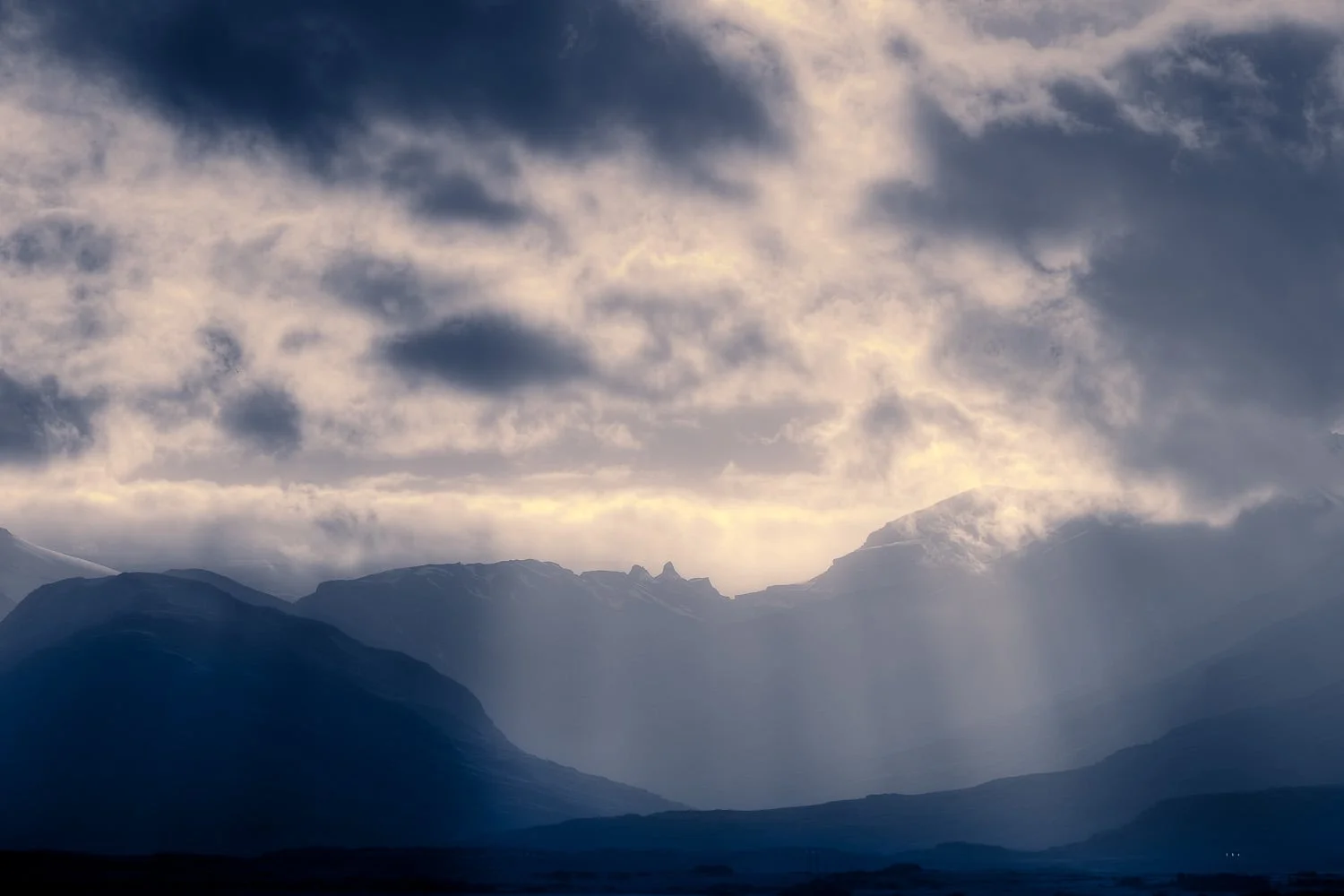


The Leirhnjúkur Lava Fields is a bizarre landscape comprising of ash and steam. Completing the hiking trail, during the middle of the night, was one of my most amazing Iceland travel photography experiences.