
Kakadu National Park: Ultimate Guide for A Really Great Trip
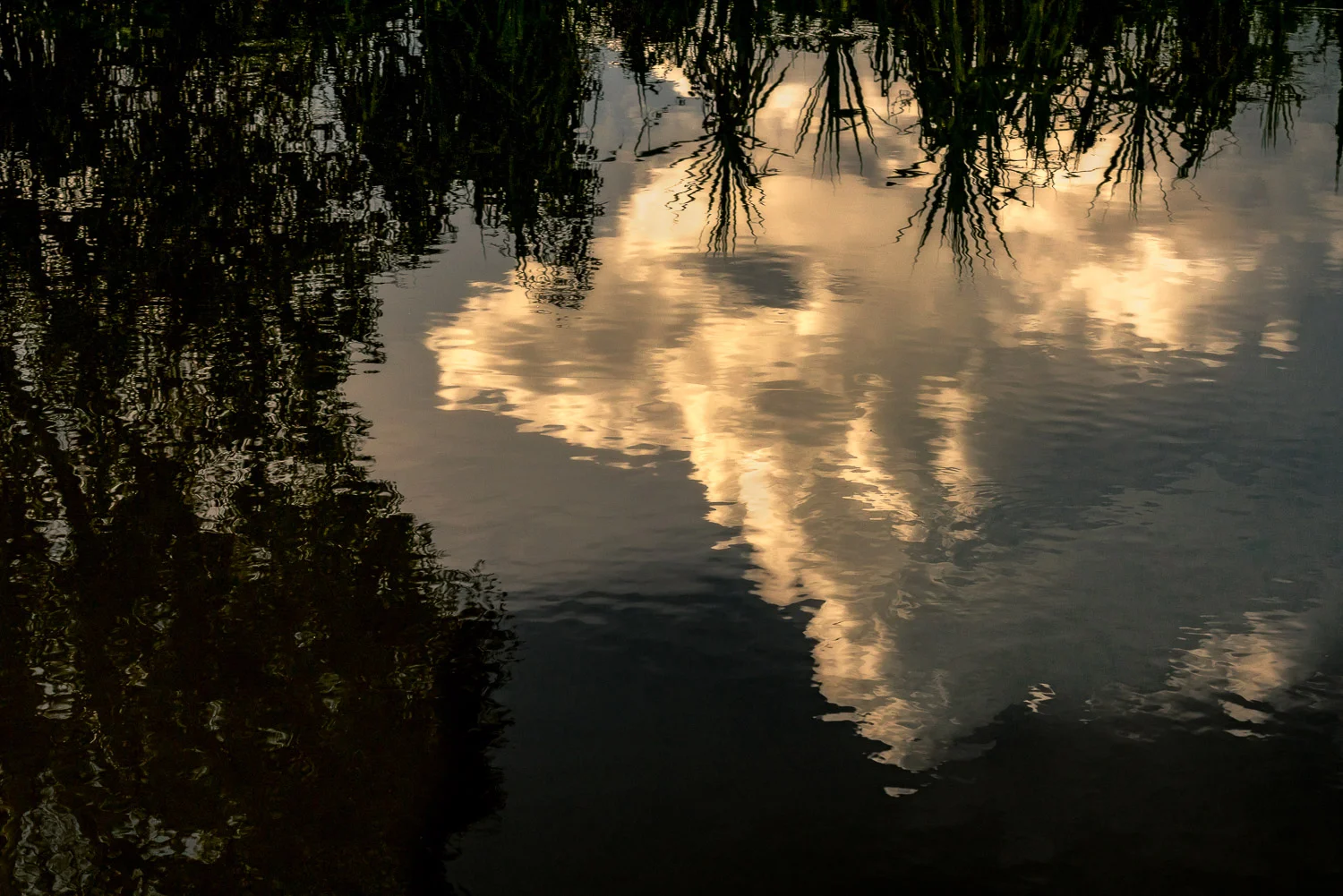
Reflection of paperbark trees, Yellow Water Billabong, Kakadu National Park, Australia.
Kakadu National Park is one of Australia’s most important and spectacular national parks, providing visitors with a great introduction to many of the regions major landscape and wildlife attractions.
Kakadu National Park is a UNESCO World Heritage-listed site. Kakadu is a huge and incredibly diverse environment showcasing ancient rock art, amazing wildlife, a range of different landscapes and evidence of continuous habitation by Australian Aboriginal people dating back over 65,000 years.
I photographed this stunning scene showcasing large paperbark trees by the water’s edge on the Yellow Water Billabong.
The late afternoon light was directly behind me, which illuminated the tree, water and grasses beautifully.
But what I really love about this image is the perfectly formed reflections of the trees on the surface of the billabong.
I remember the feeling of exhilaration I experienced while making the photo. It felt like all the effort and expense involved in traveling from Melbourne to Kakadu was worthwhile.
It’s just such a great feeling to successfully document a truly memorable travel experience.
Kakadu National Park: Facts and Figures
Covering an area of almost 20,000 km2 (7,600 mi2), which is about half the size of Switzerland, Kakadu National Park is one of the largest national parks in Australia.
At around 200 km north-to-south and 100 km east-to-west, floodplains, escarpments and woodlands await you. But so to does monsoonal rainfall, severe heat and humidity, and exotic and dangerous wildlife.
In the color months minimum temperatures can drop to a pleasant 17 C with maximum temperatures rising to around 30 C in the cooler months and up to 35 C at the hottest time of year.
While mid June to mid August is often considered a good time to visit, due to slightly lower temperatures and lower humidity, it’s important to note that, if you’re coming from cooler climbs, like winter in Melbourne, the conditions will still seem quite oppressive if your involved in active pursuits.
Needless to say sunscreen, insect repellent, a hat and lots of water are essential for anyone visiting Kakadu National Park, at any time of year.
While there’s a highway through Kakadu National Park so much of the park’s beauty is only accessible from the water or from above, looking down from a fixed wing airplane or a helicopter.
a 4WD for accessing major attractions, though many sites are accessible via 2WD,
However, except for a few rocky outcrops and billabongs that are accessible from the highway, it’s at water level that the beauty and perils within this most unique environment can best be appreciated.
Aboriginal Australian People in Kakadu National Park
More than half the national park is on Aboriginal land, traditional owners manage the park in partnership with Parks Australia.
Aboriginal Australians have inhabited this continent for more than 65,000 years.
While interaction with indigenous folk within Kakadu National Park may be somewhat limited, dialogue with local tour operators, guides and national park officers provide the visitor with fascinating insights into indigenous culture.
There are over 100,000 crocodiles in the Northern Territory, more than 10,000 of them in Kakadu.
Up to 1.5 metres of rain drench Kakadu during the summer monsoon
around 2,000 different types of plants including the following:
Mangroves
Monsoon rainforest
waterlily-covered billabongs
Open woodland
Speargrass, which grows to over three metres high, before being flattened by high winds during the annual storm season.
Kakadu's termite mounds, such as those along Maguk Road in the south end of the park, measure up to six metres high.
Kakadu National Park: Getting There
Kakadu National Park is accessible, via a 3-hour drive, along a major highway from either Darwin or Katherine in Australia’s Northern Territory.
The Arnhem Highway links Jabiru, in the north of the park, with Darwin, the capital city of the Northern Territory.
Alternatively, the Kakadu Highway connects the Arnhem Highway, near Jabiru, to the Stuart Highway near the southern end of the park.
Running north to south through the park, the Kakadu Highway is a decent quality, sealed road.
However, be aware that many of the park’s attractions need to be accessed via dirt roads or walking tracks that run off the Kakadu Highway.
Kakadu National Park: Where to Stay
As well as bush camping sites, a variety of lodges and a caravan park, there are two very comfortable places to stay when visiting Kakadu National Park.
Located just a few kilometers outside the northern edge of the park, and close to the Jabiru township, the Mercure Kakadu Crocodile Hotel is a great place to base yourself when exploring attractions at the northern end of Kakadu National Park.
Conveniently located just off the Kakadu Highway, Cooinda Lodge is right next to the magnificent Yellow Waters Billabong.
The pier at Cooinda Lodge is where you’ll board and disembark from the shallow-draft, open-sided boats used on the wonderful Yellow Waters Cruise.
I’ve joined the Yellow Waters Cruise on several occasions and can recommend the sunrise and sunset cruise times as the best option for enthusiastic landscape and wildlife photographers.
Just bare in mind that it’s a xxx drive from Jabiru down to the jetty at Cooinda Lodge, where the Yellow Waters Cruise begins and ends.
All cruises were great as I got to witness and photograph the significant changes that occur to the waterway and surrounding environs at different times of year.
I’ve had the good fortune to undertake both a sunrise and sunset cruise while staying at Cooinda Lodge.
The one minute walk from my room down to the pier made undertaking the cruise easy and stress free.
However, on another visit to Kakadu National Park, I stayed at Mercure Kakadu Crocodile Hotel.
While my room was good and the food excellent, driving in the dark through heavy rain, with flooding on either side of the highway, made the dawn drive down to the Yellow Waters Cruise an exhilarating and quite frightening experience.
Situated at the northern end of the park, the Mercure Kakadu Crocodile Hotel is close to the Ranger Uranium Mine and Jabiru Airport, where you’d go to hire an airplane or helicopter flight for a wonderful overview of the park from above.
If you have three or four days in which to explore Kakadu National Park, I’d advise splitting your time between the Mercure Kakadu Crocodile Hotel and the Cooinda Lodge in the south of the park.
The food and staff at each place is great, just don’t expect anything other than very basic and sketchy internet coverage.
Of the two I found Cooinda to be a more pleasant place to say, with superior rooms and a nicer restaurant and bar.
But the biggest advantage of staying at Cooinda is that your room is only a few minutes walk from the boat ramp where the Yellow Waters Cruise commences.
This is a critical point as it’s a good 45 minutes drive from Jabiru down to Cooinda and I wouldn’t advise making that trip in the dark on your way down to a sunrise cruise.
Kakadu Supports a Diverse Wildlife Population
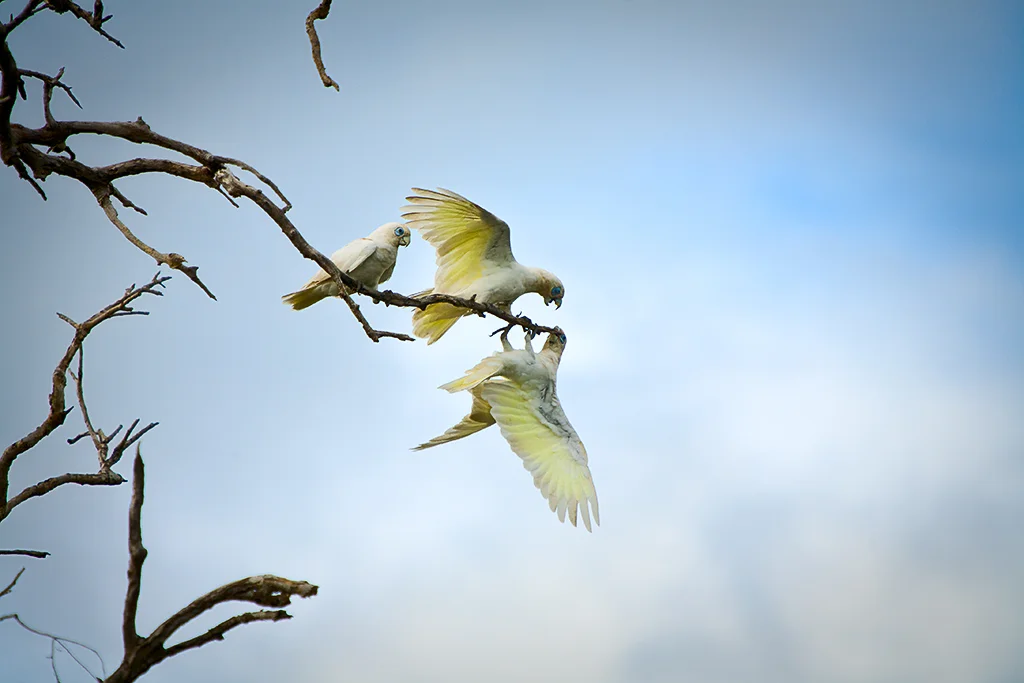
Magpie geese, sea eagles and crocodiles thrive in this environment. In fact Kakadu is a haven for around one third of the bird species found in Australia.
Fortunately the barge on which you cruise provides protection and excellent opportunities for viewing and photographing the regions flora and fauna.
I’ve been fortunate to have undertaken the Yellow Waters cruise on four occasions over the years:
Mid December, in the build up to the wet (i.e., monsoon)
Mid February, during the wet season
July, during winter, which is the dry season in the Top End of Australia.
Viewing the wetlands at different times of year was a great education and it’s allowed me to produce a diverse range of images of Kakadu National Park.
Nonetheless, I know I’ve barely scratched the surface when it comes to exploring this vast and ancient landscape.
That’s why I’II return, again and again.
What to See and Do in Kakadu National Park
And of course there's wonderful rock art, with paintings dating back 20,000 years, accessible at the Ubirr, Burrungkuy (Nourlangie) and Nanguluwurr rock art sites within Kakadu National Park.
Photography And The Choices You Make
I remember waiting with other members of the crew to show up for our evening meal at Cooinda Lodge. We were all outside sitting around picnic tables cooling off after a very hard day working on location.
Despite my fatigue, the warm end of day light got me up and moving, looking for a photo opportunity.
Other folks jumped at the sight of water being propelled upwards.
World Champion swimmer Ian Thorpe had decided to take a quick dip in the resorts swimming pool and, once he gets that famous kick going, water begins to fly.
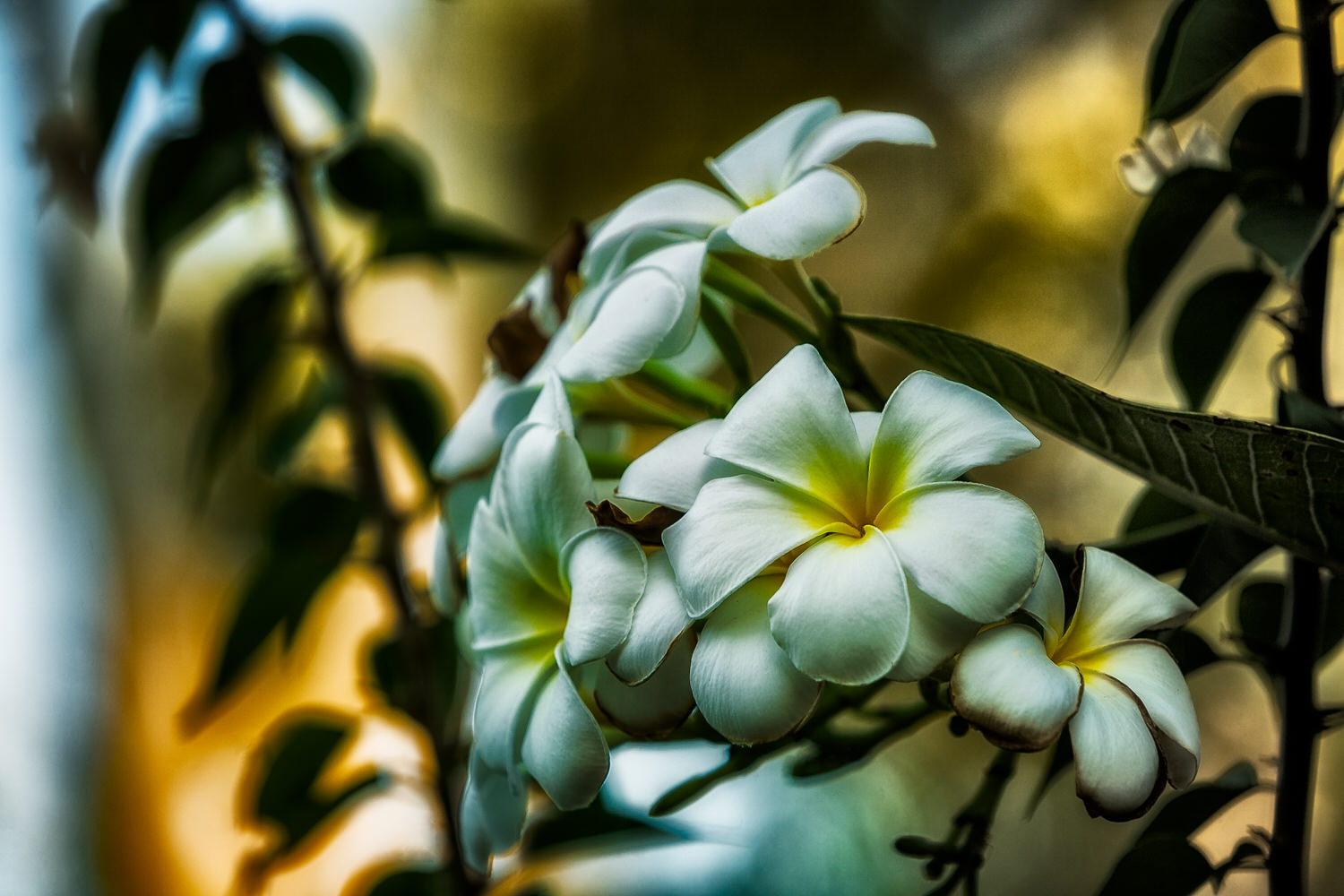
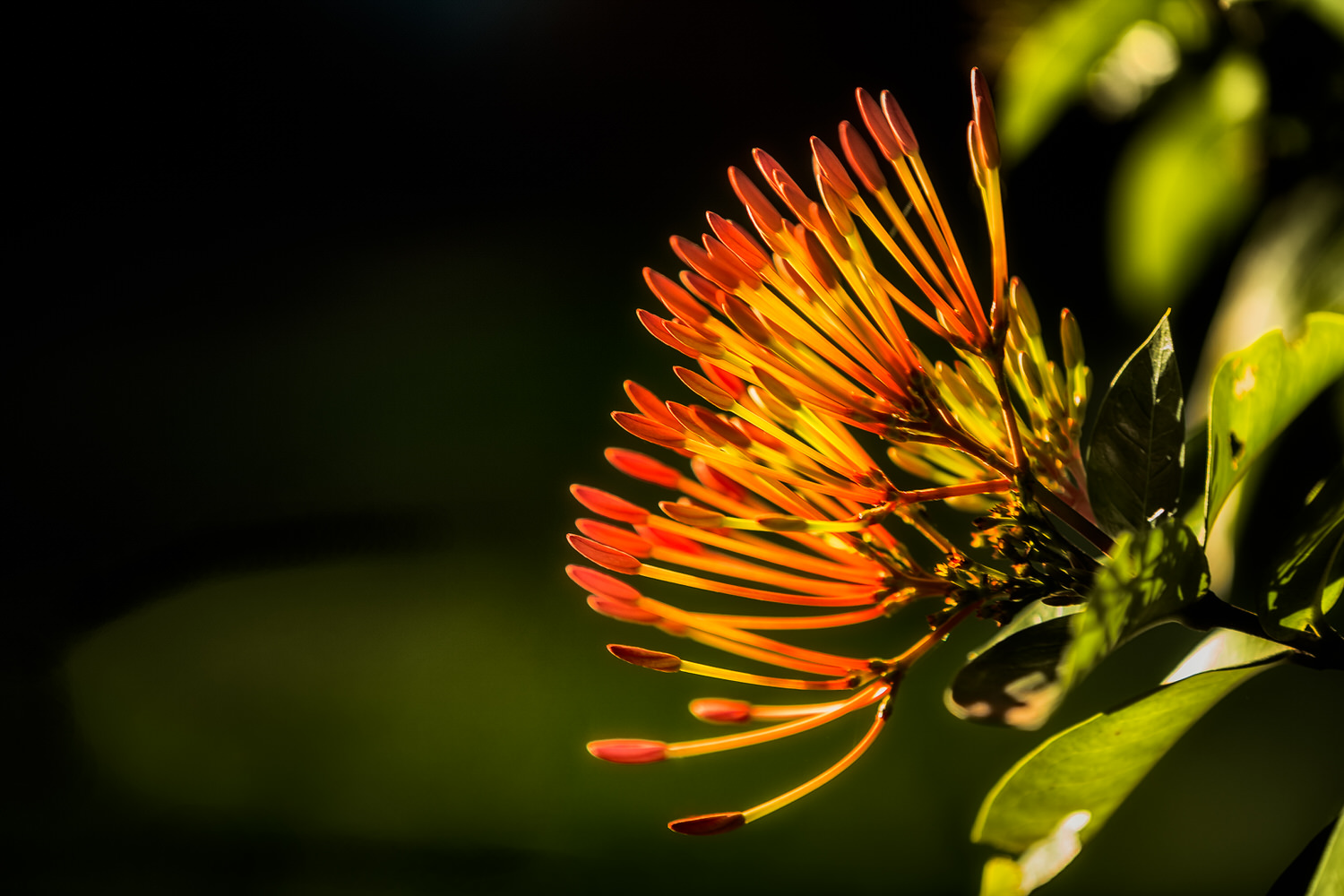
But I was more interested in exploring the lush gardens at Cooinda Lodge and, at that time of day, the transforming and transcendental nature of the light was something to behold.
I was rewarded with these intimate views of flowers in the hotel garden. Such simple images, yet some of my favorites from the trip and a nice reward after such a long and hard days work.
I guess the lesson here is that, no matter how tired you feel, the day’s not over for the landscape photographer until the light is well and truly gone.
And even then flash and night photography possibilities come to the fore. Though, perhaps, such endeavors are best explored in environments less wild than Kakadu.
Reflections are beautiful, calming and somewhat symmetrical. They have the ability to bring notions of earth and sky, physical and spiritual together into a cohesive and harmonious form.
A small group of trees on a tiny island on the Yellow Waters Billabong in Kakadu National Park, Australia.
Kakadu National Park: How to Photograph Light And Weather
To maximize photo opportunities it’s desirable to take photos with the best possible light.
In the case of landscape photography, that often means getting up before dawn and/or finishing your photo adventure after sunset.
You’ll find the warm, soft quality of light, prevalent early or late in the day, to be ideal for landscape photography.
Unfortunately, in the middle of the day, light is often of a considerably harsher quality in Kakadu National Park.
What’s more, the fact that the intensity of the light is often much brighter during the middle of the day, results in photos featuring dark, impenetrable shadows.
While sometimes acceptable in black and white photography, dense shadows are generally not preferred by color landscape and wildlife photographers.
Indeed, the higher dynamic range, and the resulting loss of shadow detail, is considered undesirable.
Thus the need to set your alarm clock and accept a painfully early start to the day.
Fortunately, less desirable weather provides opportunities for wildlife and landscape photographers to avoid limiting their photo adventures to either end of the day.
Overcast weather reduces contrast, which is one of the advantages of taking photos during the wet season when heavy cloud cover helps to maintain detail in shadow and highlight areas of the scene.
Likewise, inclement weather often produces very descriptive and emotive images and the quality, direction and color of the light, on the edge of changing weather, can produce very dramatic results.
I’m referring here to the spectacular light that, on occasions, appears just before and/or just after the onset of rain.
That’s exactly what occurred when I made this photo of a small group of paperbark trees isolated on the waters of the Yellow Waters Billabong.
Together with the brooding sky, the light illuminating the trees made for a dynamic black-and-white photo.
Naturally, care should be taken during the wet season (i.e., monsoon) in areas such as Kakadu National Park. You don’t want to be driving too far from shelter when the rain comes down.
Nonetheless, to witness the power of a monsoonal downpour, from the relative safety of a parked car, hotel or while on a Yellow Waters Cruise, really is an amazing experience.
Kakadu Weather: When It Rains It Pours
I remember a particular heavy downpour commencing, just as I pulled my car into the driveway at the Mercure Kakadu Crocodile Hotel.
I noticed a young, indigenous woman standing under the verandah at the entrance to the hotel. Apparently, she’d been out for a run and had been caught in the deluge.
I discovered she was a local school teacher and I was happy to offer her a lift back to the family home in nearby Jabiru.
While only a few kilometers away, it was a pretty scary trip. In fact a tree had fallen across the road, requiring us to take a detour.
Quite close to her house we passed a large lake. I asked if there were any crocodiles in there.
She replied that a big old croc had recently been sighted in the lake, but that local folk knew how to keep their eyes pealed in the event of attack.
An inquesitive crocodile in the Yellow Waters Billabong, Kakadu National Park, Australia.
Yellow Water (Ngurrungurrudjba) Billabong, located in the heart of Kakadu National Park near Cooinda, is a world-renowned wetland famous for its immense biodiversity, including saltwater crocodiles, wild horses, buffalo, and extensive birdlife.
I had to transfer a sunrise cruise due to the torrential rain that was falling at Jabiru. I just didn’t think it was safe to drive, particularly in the dark, down to Cooinda.
As it was the cruise went ahead and it would have been interesting to have photographed, under the boats canopy, in the rain.
Nonetheless, large aluminum vessels are not necessarily where you’d want to be during a lighting storm.
Fortunately I was able to transfer my pre-purchased ticket to the following morning, which I really appreciated.
I headed down to the Cooinda Lodge later that day and boarded the cruise the very next morning.
The weather was fine and I had the advantage of being the only customer on board which allowed me to move around the launch and make lots of photos.
What an amazing experience I had photographing that morning on the Yellow Waters Billabong. My guide was fantastic, as were the opportunities to make great photos.
Kakadu National Park: Beware of Crocodiles
I photographed this inquisitive saltwater crocodile in the Yellow Waters Billabong in the late afternoon light.
One of the the great things about the Yellow Waters Cruise is that it gets you nice and close to crocodiles, while keeping you safe aboard the specially equipped boats.
The fact that these boats have a shallow-draft makes it possible to push up really close to crocodiles when they’re relaxing by the water’s edge.
Whether it’s the wildlife, the landscape or the heat and humidity there’s no doubt that, when visiting Kakadu National Park, you become keenly aware of the environment that surrounds you.
I’ve had the good fortune to visit Kakadu on four separate occasions. While it’s an incredible place with opportunities for great landscape and wildlife photography, I’ve never felt like I belonged there.
It’s just far too wild and dangerous a place for me.
And crocs give me the screaming willies!
Able to stay submerged and hidden under the surface of dark waterways for considerable periods of time, the saltwater crocodile is, arguably, the animal world’s canniest and fiercest exponent of attack by ambush.
Given the speed and ferocity at which they attack, it’s sheer madness to linger close to the water’s edge in the Top End of Australia.
Having said that, taking photos of saltwater crocodiles in the wild is an exhilarating experience. And I recommend you do so, from the safety of an organized boat tour, should you travel to Kakadu National Park.
There’s Only One Way To Photograph Crocodiles
One thing that’s critical about traveling in the Top End of Australia is to keep away from water. Here’s what you need to know:
Don’t swim in waterholes, rivers, creeks or the sea
Keep well away from river banks
When the water’s deep enough the saltwater crocodile has the ability to hold a vertical position underwater and, as quick as a flash, propel itself up from below the surface to snatch prey.
It’s good to remember that crocodiles hunt by ambush, at which they are undisputed masters.
There are signs everywhere warning folks about the dangers of attacks from saltwater crocodiles. But that doesn’t stop some folks, particular tourists.
They probably don’t realize that an isolated and inviting waterhole was, quite possibly, part of a river during the wet season.
The force of a flooded waterway can wash a crocodile downstream. But, eventually, the rain stops and the crocodile begins to explore and exploit the environment in which they’ve found themselves.
Over time the waters reside and the crocodile finds itself in an ever shrinking waterhole.
But the saltwater crocodile can exist in both salt and fresh water environments, which is one of the things that makes them so very, very dangerous.
My view is that there’s only one way for anyone, other than an appropriately qualified naturalist, to photograph saltwater crocodiles in the wild.
And that’s from the safety of a professionally crewed launch in places like Yellow Waters within Kakadu National Park.
The rangers there really know their stuff. They’re extremely knowledgeable and trained to provide you with a safe and intimate wildlife viewing experience.
Behind the scenes view of a film crew at the Abangbang Billabong in Kakadu National Park, Australia.
Kakadu National Park: How to Take Photos on Bright Sunny Days
While I enjoy the solitude often associated with landscape photography, Kakadu is the kind of environment where it’s advisable to be in the company of others.
I made the above image while working with former world champion swimmer, Ian Thorpe, and members of the Fish Out Of Water documentary film crew at the Abangbang Billabong in Kakadu National Park.
“The brighter the light, the darker the shadows will photograph.”
As you can imagine, the umbrellas evident in the above photo were employed to protect Thorpie, and members of the crew, from the heat of the sun.
Actually, for reasons of continuity, it’s considered important that the appearance of talent on a TV show generally doesn’t change too much during filming.
This is why a scene shot for TV, which might take several days to film, could see the actor wearing the same, freshly laundered clothes during each day of filming.
When it comes to dramatic TV and motion picture productions, filming isn’t always conducted in sequence.
It just wouldn’t make sense to see an actor’s skin showing the effects of sunburn, only to appear unaffected moments later in the same scene.
Needless to say, no one’s ever held an umbrella over my head to protect me from the ravages of the sun. And it shows!
In the case of the above photo, the fact that members of the crew were doing what they could to find shade, produced a problem for me.
increased the dynamic range in a composition encompassing a broader view of the landscape.
The result of which would have seen their faces and bodies photographing darker than they would have appeared in reality.
Needless to say, there are ways to resolve this issue. Recent DSLR and Mirrorless cameras have the ability to successfully recored shadow and highlight detail in relatively high contrast scenes.
Likewise, applications like Adobe Lightroom allow you to selectively lighten shadows and darken highlights to achieve a more acceptable result.
But the key to a better picture is to ensure detail is not lost in the highlights. You see it’s hard, if not impossible, to put detail into overly bright, burnt out areas where none was recorded during the original camera exposure.
The best way to overcome this problem is to base your exposure on the highlights. In other words, change one or more of your camera settings to ensure important highlight areas within the scene record with sufficient detail.
Over the years I’ve used either a reflector or fill flash to lighten shadow areas within the scene.
Depending upon a range of criteria, neither of these options is perfect.
In the days of film based photography, I loved working with a reflector because it allow me to see and adjust the effect the reflector had, prior to taking the photo.
However, with the near instant feedback associated with today’s digital cameras, I’m now more likely to adopt fill flash in such circumstances.
What’s more, you need an assistant to hold a reflector and direct light, with a degree of expertise, towards your subject.
While it’s sometimes desirable to have fill flash fired remotely from arm’s length or further away from the camera, decent results can often be achieved with the flash mounted on top of the camera.
A sunlit water lily on the Abangbang Billabong in Kakadu National Park, Australia.
Kakadu Nature Photography: A Study In Composition
All of the photos in this post were made with a Canon full frame camera. I made this image of a sunlit water lily, with a Canon 70-200 mm f/2.8 L series lens and a Canon 2x Extender. The effective focal length was 235 mm.
Both trips were great as I got to witness and photograph the significant changes that occur to the waterway and surrounding environs at different times of year.
My visit back in 2007 coincided with the heaviest rainfall in the region for 100 years.
Of course changing rain patterns worldwide do not always result in less rain. Other places around our world are experiencing significant increases in rainfall, whether there are reservoirs to catch and hold that precious rainfall or not.
The environmental balance can be a tenuous one. A local guide told me that, in the case of Kakadu, a significant increase in long-term rainfall would have a catastrophic effect on the local environment.
I’m reminded of the saying that the only constant we have is change.
To ensure successful photos, it’s important to be
Making great photos in Kakadu National Park is really no different than other location. To maximize opportunities it’s desirable to be photographing with the best possible light.
Needless to say, when it comes to wildlife photography, you’ll need to be where the action occurs and be ready to record it as it unfolds.
As lot of wildlife is most active at the edges of the day (i.e., early or late), it’s important to plan your trip so that you can be in position to record the light caressing the landscape, billabongs and rivers when the birds or crocodiles are likely to be both visible and active.
So its important to plan your trip so that you can be in position to record the light kissing the mountaintop, or (safely in the boat) on the water when the birds or crocodiles are likely to be both visible and active.
Just remember that, as Kakadu National Park is situated close to the equator, the sun approaches the horizon and sets very quickly.
A darter bird resting on a tree branch above the Yellow Waters Billabong in Kakadu National Park, Australia.
How To Photograph The Australasian Darter Bird
280 different bird species make their home in Kakadu. That's about one third of all the bird species in Australia.
While not the world’s most attractive bird the Australasian Darter is, nonetheless, quite special. It’s a medium size water bird, measuring around 90 cm in height with a wing span up to 1.2 meters.
Most of the bird’s color is found in its bright yellow colored bill, though other markings appear during courtship.
Diving into the water in search of prey, and staying submerged for up to a minute, the darter spears fish which it then brings up to the safety of a tree where the prey is turned around and swallowed, head first.
This image of a darter bird was made from a boat on the Yellow Waters Cruise in Kakadu National Park.
A bird in silhouette, Kakadu National Park, Australia
Aerial view of the Mercure Kakadu Crocodile hotel in the town of Jabiru just outside the northern boundary of the Kakadu National Park, Australia
Helicopter and Airplane Flights over Kakadu National Park
Flying over Kakadu is the perfect way to get a sense of the gigantic size and scale of the national park.
I tried for several days to book a seat on a helicopter in the hope of being able to photograph Kakadu from above.
I was the only person trying to do so and, to make it happen, I had to pay for two seats which, sadly, was beyond my budget.
In the end I opted for a seat on a small fixed wing plane.
It was a fun trip though, as you can see from the above image, I found it extremely difficult to photograph through the tiny windows on the plane when so tightly belted into my seat.
Unfortunately, though I tried for several days to book a helicopter flight, I was unsuccessful. Due to low demand, the only way I could have done so was as the only passenger.
While an exciting option for a travel photographer, the cost was simply prohibitive.
In the end I opted for a fixed-wing flight over Kakadu. It was a great experience, but with small windows and a very low seat, I found it really hard to take decent photos from that plane.
I suppose I was spoiled, many years ago, when I was able to photograph the Twelve Apostles in Victoria from a helicopter with a door removed to make taking photos easier.
Now that was a blast.
Kakadu is a Beautiful and Wild Environment
I’ve had the good fortune to have visited and photographed Kakadu National Park on three occasions and, each time, I was very conscious of all the things there that could kill me.
Nonetheless, it’s a great place to visit so long as you exercise basic common sense. This is Australia, after all.
I simply cannot understand while certain tourists choose to swim in waterholes and rivers ignoring the signs warning of the potential of crocodile attack.
That’s just nuts!
Kakadu National Park is a wild and beautiful environment offering visitors are unique travel experience in the Top End of Australia.
I look forward to my next visit to Kakadu and I enthusiastically recommend Yellow Waters; in particular the sunrise and sunset cruises, to all keen photographers. Maybe I’II see you there.


Angels have long interested artists, scholars and philosophers. This post will help you make great photos of angel statues on your own travels, whether to distant lands or during local explorations of your own neighborhood.